
Every year, thousands of students pack up their lives and move to a new country to study. Most of them spend months choosing a university, but very few put the same effort into planning what comes next. As a result, avoidable mistakes often start long before students arrive on campus.
The challenge is that these mistakes often seem minor during the planning stage. But once you’ve committed to a destination and timeline, correcting those mistakes often takes far more time, money, and effort than expected.
In this guide, we’ll cover the common study abroad mistakes and why students make them. You’ll also learn how to avoid them and plan for a smoother overseas study experience.
First, the most common one of all: poor research.
Researching the Wrong Things Before You Apply
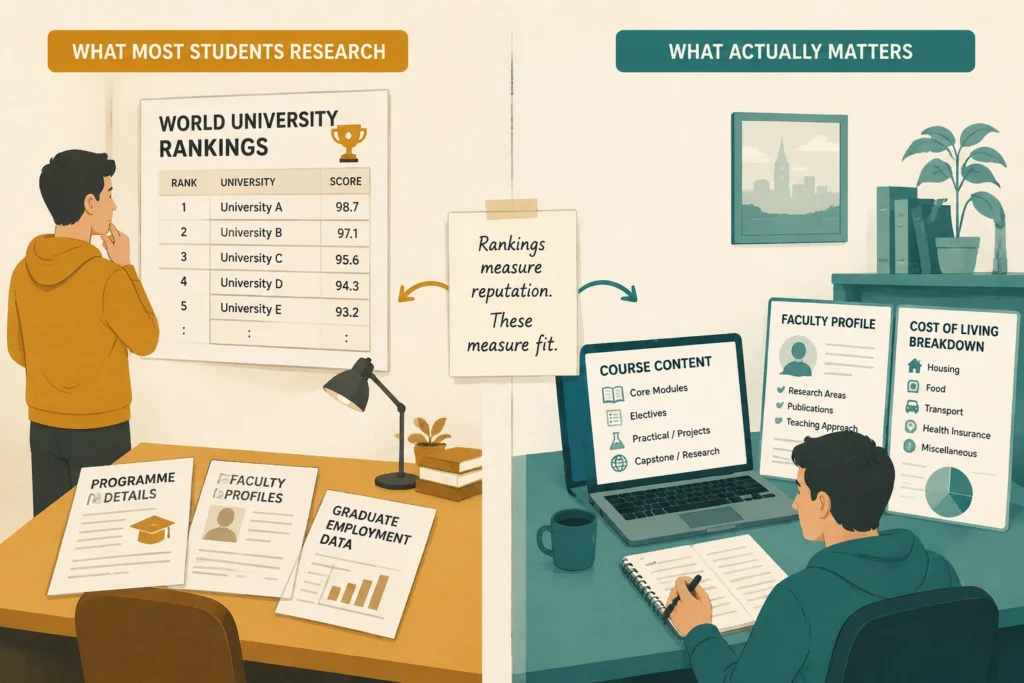
When students start planning to study abroad, most begin with university rankings. That’s not necessarily a problem, but rankings alone rarely tell the full story.
Many students overlook factors that can have just as much impact on their experience, such as programme quality and living costs. We cover both below.
Trusting University Rankings Too Much
As we mentioned, many students spend hours comparing university rankings rather than researching the specific programme they’ll actually study. Global rankings primarily measure research output and institutional reputation. They rarely reflect the quality of a particular course.
For example, a university sitting in the global top 50 can still have a mediocre programme in your field. In contrast, a lesser-known institution may offer stronger teaching, better industry connections, and more relevant graduate outcomes.
To avoid this mistake, look beyond rankings and review the course content, faculty expertise, and graduate employment data. University websites often provide this information and are a good starting point for your research.
Cost of Living Is Often the Last Thing Students Check
When you’re focused on applications and deadlines, living costs can easily become an afterthought. But expenses such as rent, groceries, and transport can rival or even exceed tuition fees in major cities. Cultural differences in food, lifestyle, and daily spending can also make a significant difference to your monthly budget.
That’s why, before choosing a destination, research average living expenses and build a realistic monthly budget. This approach will help you determine whether a university is genuinely affordable beyond its tuition fees.
A Rushed Application Can Limit Your Options
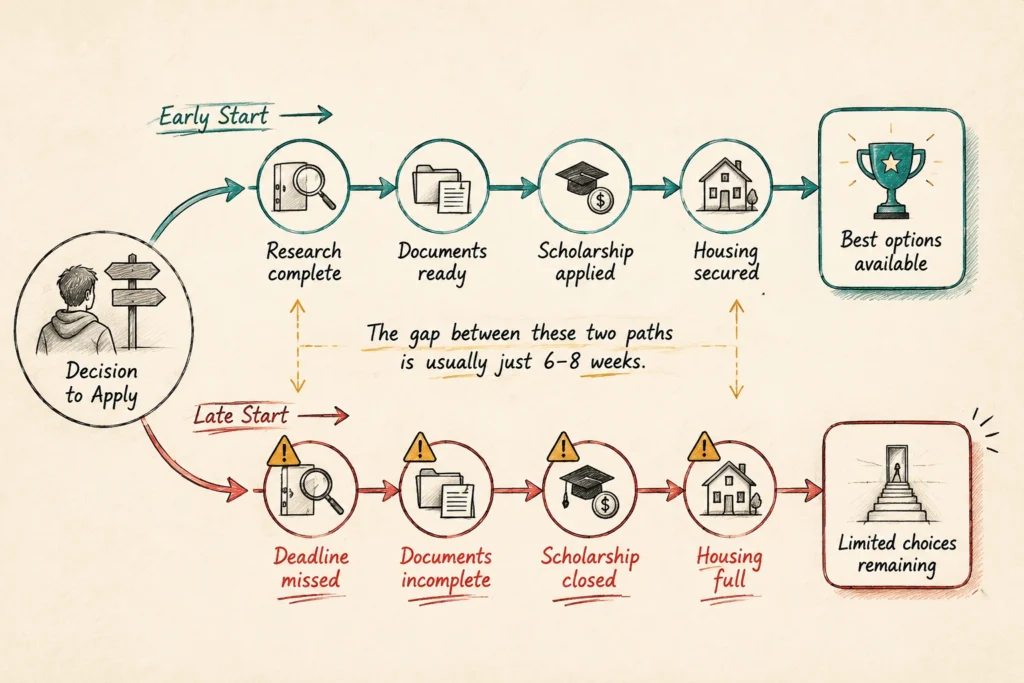
Research is only the first step. Once you’ve chosen a programme, the application process has its own set of pitfalls.
In most cases we’ve seen, students who start early almost always have more choices at the end of the process. Leaving it too late can mean missing out on scholarship opportunities, preferred intake dates, and, in some cases, student housing.
The following mistakes are among the most common reasons students limit their options during the application process:
- Missing application deadlines for your preferred intake
- Not checking programme-specific entry requirements
- Overlooking separate deadlines for scholarships and student housing
- Submitting applications without double-checking required documents
- Failing to account for processing times for transcripts, test scores, visas, or other supporting documents
The earlier you begin preparing, the more flexibility you’ll have throughout the application process. Giving yourself extra time can make the difference between settling for what’s available and choosing from your best options.
Incomplete Financial Planning for Overseas Study
Tuition fees are usually the first number students write down when they start planning to study abroad. Unfortunately, many just stop there. As a result, their budget doesn’t reflect the true cost of living abroad.
The gap usually comes from expenses that aren’t considered early enough. Rent, utilities, groceries, transport, health insurance, and visa fees can substantially increase the total cost of studying abroad. When these costs aren’t accounted for from the start, students often find themselves under financial pressure long before the academic year ends.
That’s why budgeting needs to go beyond tuition alone. A realistic financial plan covers both tuition and living expenses. It’s also worth researching scholarships, grants, and other financial aid opportunities early, as they can take a real chunk out of your overall costs.
Leaving Language Test Prep Too Late
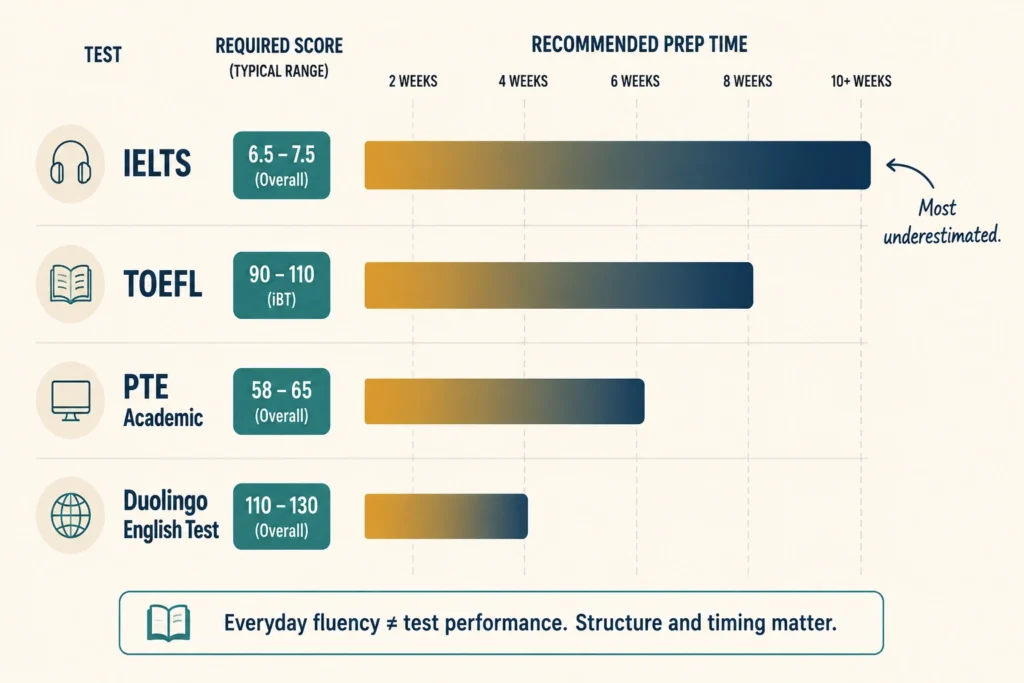
Plenty of students who speak English confidently every day still struggle to achieve the scores universities require. After all, language tests assess specific skills under timed, structured conditions. As a result, everyday fluency doesn’t always translate into a strong test result.
The table below shows the typical score ranges required across the most common language tests.
| Test | Minimum Score Range | Recommended Prep Time |
| IELTS | 6.0 – 7.0 (band score) | 3 – 6 months |
| TOEFL | 80 – 100 (iBT) | 3 – 6 months |
| PTE Academic | 58 – 65 (overall) | 2 – 4 months |
| Duolingo English Test | 105 – 120 | 1 – 3 months |
Note: Score requirements vary by university and programme. Always double-check the language requirements on the university’s official admissions page before you start preparing.
Not Giving Your Documentation Enough Time
It’s tempting to get your application submitted quickly and move on. But documentation is one area where rushing can lead to avoidable mistakes that delay or weaken your application. Missing details or incorrect information can force unnecessary revisions and, in some cases, affect your chances of approval.
To avoid these issues, pay close attention to the following areas:
- Personal Statement: Admissions teams read thousands of generic statements every cycle. To set yourself apart, write one that speaks directly to the programme, your career goals, and why that specific university is the right fit for you. That level of detail takes time, so don’t leave it to the last minute.
- Recommendation Letters: Don’t approach your referees at the last minute. It leaves them little time to write anything meaningful, and a vague letter can work against you. So you should ask early, give them a clear brief on the programme, and let them know what qualities the admissions team is looking for.
- Required Documents: Each university has its own checklist, and they’re not always the same. Leaving document collection until the last minute increases the risk of missing important requirements or submission deadlines. So give yourself enough time to gather, review, and verify everything before you apply.
Preparing documents for an overseas study application takes longer than it looks. In fact, it often takes six to eight weeks when you factor in referee responses, certified translations, and university-specific requirements. That’s why we always recommend starting at least three months before your intended submission date.
Skipping Visa and Health Cover Preparation
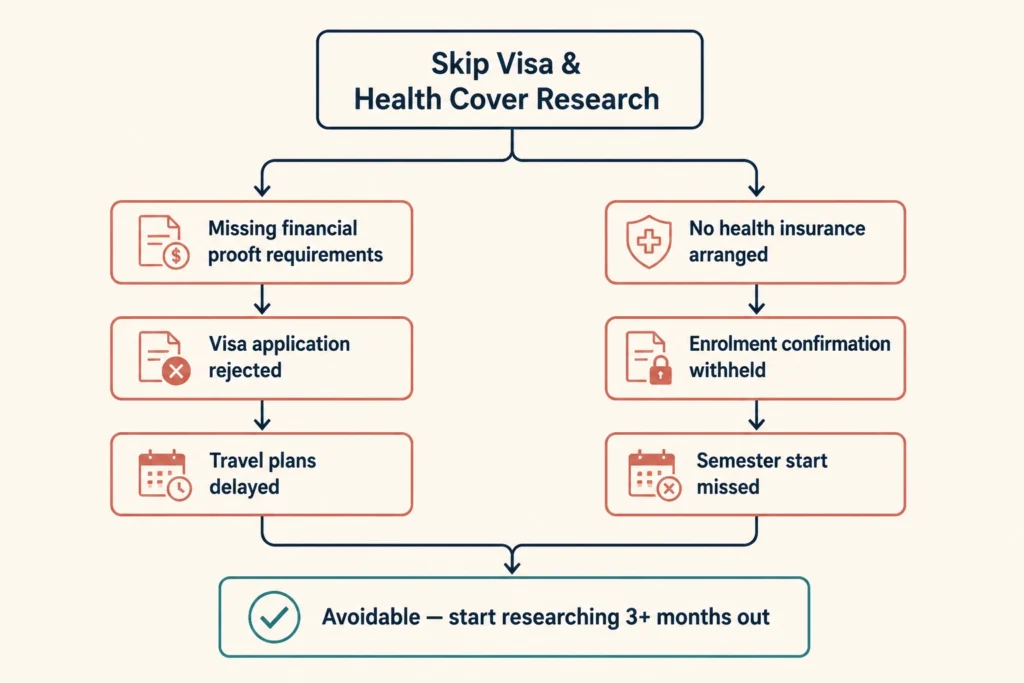
Student visa applications have strict requirements, and gathering the necessary documents can be a lengthy process. Each destination country has its own document requirements, processing timelines, and financial conditions that must be satisfied before approval.
The UK, for example, requires proof of funds for a UK student visa, and many other countries have similar requirements.
Health insurance is often part of that preparation process. In some destinations, students must show proof of coverage before a visa can be issued or enrolment can be confirmed. Leaving these requirements until the last minute can delay your travel plans and create unnecessary stress.
To avoid these issues, start researching visa and health insurance requirements as early as possible. You should also confirm that your health insurance policy meets the specific standard your destination country requires for student enrolment.
Avoiding Common Study Abroad Mistakes Starts with Planning
Most of the study abroad mistakes covered in this guide come down to one thing: starting too late. The earlier you begin preparing, the more time you have to research your options, meet application requirements, and avoid unnecessary setbacks. Frankly, deadlines feel far less stressful when you’re not racing toward them.
A good starting point is to map out each stage of the process. This includes researching universities, preparing applications, arranging your visa, and sorting your finances. Breaking the journey into smaller steps can make planning feel far more manageable.
As you move through the process, revisit the areas covered in this guide to make sure nothing gets overlooked. For more international education resources, visit Highlands Golfcourse and continue planning your next steps.