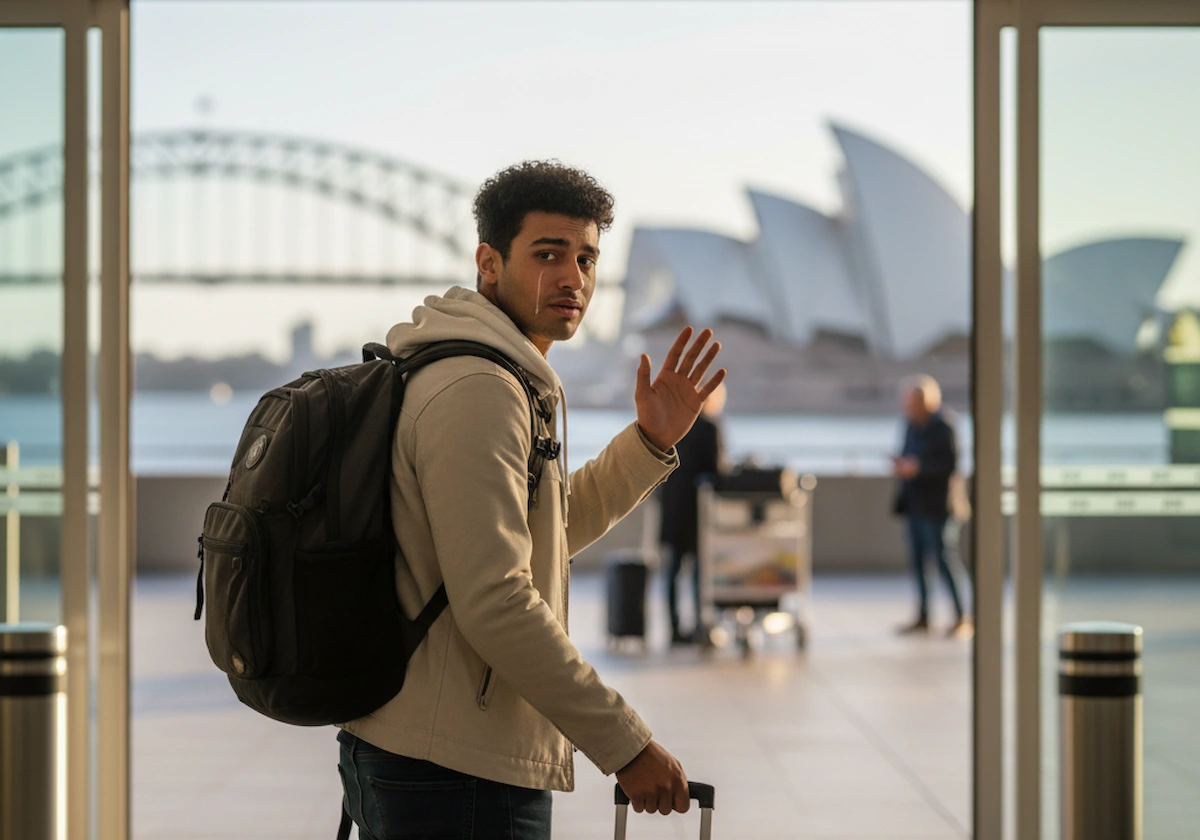
When you step off the plane in Sydney or Melbourne, far from your dear home, it is a huge leap in location. But for international students choosing to study abroad in Australia, the real change begins inside your mind.
Within weeks, your brain begins to adapt to an entirely different environment. It rewires itself in response to unfamiliar classrooms, different communication styles, and academic expectations. Which will eventually reset everything you thought you knew about learning.
Studying abroad changes the way you understand information, tackle problems, and see the world. The impact hits deeper than you might expect.
So if you’re curious about what type of glow up you’ll get, keep reading on!
What Happens To Your Brain When You Study Abroad In Australia?
If you think studying abroad only changes your environment, then you need to look inside. Because the entire process actually reshapes the way your brain works. Research shows that spending time in new environments helps your brain create new connections to adjust and learn.

How Different Teaching Styles Change Your Thinking
Australian universities can be entirely different from many students’ home institutions. Usually there’s nowhere to hide in the back row in Australian classes. So instead of passively listening, you have to take part in active discussions and debates. For example,
- Tutorials: Small groups of 10 to 15 people, where you come prepared to explain your ideas and challenge others.
- Active learning: Moving between listening and speaking helps your mind stay flexible.
- Critical thinking: Over time, you begin to look at problems in new ways and question old assumptions.
This constant mental switching builds cognitive flexibility. For this reason, your brain learns to hold multiple perspectives simultaneously, analyse arguments in real time, and articulate complex ideas under pressure.
And the fascinating fact is, most students notice these changes after just one or two semesters. The change feels subtle at first, but then it becomes impossible to ignore.
Language Adaptation Rewires How You Process Information
Even native English speakers pick up new habits thanks to Aussie slang and speech patterns. The rhythm, slang, and tone of everyday speech push your brain to work harder at first.
- Words like arvo (afternoon) and reckon (think) become part of your vocabulary.
- Conversations often end with a rising tone that sounds like a question.
- You’ll pick up idioms and humour that don’t translate directly.
Your brain works harder to understand this, and it improves language processing and pattern recognition. For students learning English as a second language, it helps vocabulary and grammar stick better than studying in a classroom.
What’s more, the mental focus needed to communicate across cultural and linguistic differences also sharpens other abilities. You improve your planning, emotional regulation, and multitasking. These are skills that carry you to every part of your life.
How Do Australian Universities Change Your Learning Approach?
Australian universities change your learning approach by making you an active participant rather than a passive listener.
The focus changes from memorising lecture notes to understanding, applying, and questioning ideas. Classes are designed to make you think independently, work with others, and connect theory with real-world problems.
So how does this shift happen in practice? It starts with how Australian universities structure their classes.
Tutorial-Based Learning Replaces Lecture-Heavy Formats
Most subjects at Australian universities mix up large lectures with mandatory tutorials of around 10-15 students. The tutorials are where you put theory into practice through discussion, debate, and collaborative problem-solving.
This is how tutorial learning differs from traditional classes:
- Preparation: You’re expected to complete readings before class.
- Participation: Speaking up and engaging often counts for 10–20% of your grade.
- Teaching style: Tutors guide discussion instead of just presenting slides.
- Assessment: Weekly contributions often replace part of the final exams.
This model keeps you active throughout the semester. You can’t rely on memorising notes and lecture slides the night before an exam. Instead, you have to learn by active efforts and you’ll get a deeper understanding and better memory retention over time.
It does not matter whether you’re studying business in Brisbane, law in Melbourne, or research in Sydney. This setup of learning stays consistent across most Australian universities.
Learning by Doing, Not Memorising
Australian higher education puts real-world skills at the front and centre. Instead of repeating theories on a test, you would have to:
- Work on case studies or live client projects
- Join an internship or industry placement
- Build a portfolio that mirrors professional work
Many universities help you gain practical experience through work-integrated learning, and your student visa allows you to work part-time while studying. This combination of study and work makes learning more relevant and immediately useful.
How Is It Different?
It is different because you stop seeing learning as memorising facts and start treating it as problem-solving. You end up testing ideas, making mistakes, and learn through experience. That process builds creativity, adaptability, and confidence.
And needless to say, these skills stay with you long after graduation.
Eligibility Requirements for Study Abroad Programs in Australia
Getting into an Australian university as an exchange or study abroad student isn’t complicated, but it does take some preparation. You’ll need to meet both your home university’s requirements and the admission criteria of the Australian institution.
1. Basic Requirements That You Must Meet
Each program has different requirements for eligibility, but there are some common thresholds to reach. Most universities look for the following:
- Academic standing: A GPA of around 2.5–3.0 or higher
- English proficiency: IELTS 6.5 or TOEFL iBT 79, if English isn’t your first language
- Course prerequisites: Some subjects (like business or engineering) require prior coursework
- Student visa: Apply for a Subclass 500 visa (around AUD $710) and arrange health insurance
- Financial proof: Show you can cover tuition, housing, and living costs

All international students must also have Overseas Student Health Cover (OSHC). This policy covers basic medical expenses during your stay and usually costs AUD $500–700 per semester, depending on the provider.
2. Application Timeline to Plan Ahead
Planning ahead makes all the difference when applying to study abroad. Deadlines come up faster than you think. Especially with visa and course approval steps that take time.
- Semester 1 (starts February): Apply by October of the previous year
- Semester 2 (starts July): Apply by April
If your university has an exchange partnership with an Australian school, the process is often easier. That way, your home university will guide you through most of the paperwork.
3. Credit Transfer Opportunities
Before leaving, you’ll work with academic advisors at both universities to make sure your Australian courses count toward your degree. Most accredited exchange programs guarantee that credits transfer back, though the exact subjects and hours depend on the agreement.
4. Program Costs You Can Expect
Understanding how the payment structure works helps you budget realistically before you go. Some students pay their home university as usual, while others pay tuition directly to the Australian institution.
|
Program Type |
Who You Pay |
Typical Cost (per semester) |
|
Exchange |
Your home university |
Tuition paid as usual (covered under exchange agreement) |
|
Direct enrolment |
The Australian university |
AUD 15,000-45,000, depending on program and school |
5. Support and Resources You Can Get
Australian universities are used to welcoming international students. Their International Student Offices help with visa questions, accommodation, and orientation programs. Many schools also match you with a local student mentor who can offer practical tips and help you settle in faster.
A Quick Summary of the Costs
Studying abroad in Australia includes a full lifestyle shift, with living and travel costs to plan for. So before deciding on your next steps, this breakdown will help you understand exactly what kind of investment you’re making.
A realistic semester budget looks something like this:
|
Expense Category |
Cost Range (AUD) |
|
Tuition/program fees |
$15,000-25,000 |
|
Accommodation |
$8,000-15,000 |
|
Living expenses |
$5,000-8,000 |
|
Travel and entertainment |
$2,000-5,000 |
|
Health insurance (OSHC) |
$500-700 |
|
Total per semester |
$30,500-53,700 |
(Approximately USD $20,000-35,000 per semester)
The Career Payoff You Can Expect
We all know how a study abroad experience makes your resume look good. But along with that, it changes how you think, adapt, and communicate, which is even more beneficial for your career growth. Let’s see what it does:
- Employers notice it: Our surveys show 64% of business leaders value international experience, and over 90% look for strong cross-cultural communication skills.
- Skills that stick: You’ll naturally build flexibility, problem-solving ability, and cultural awareness—the kind of traits that help you thrive in global workplaces.
- Long-term gains: Graduates who studied abroad often report faster career growth and higher starting salaries.
In other words, you’re basically investing in your future adaptability and confidence. So while you’re investing money upfront, you’re likely to see returns down the road in more ways than you can imagine.

How to Make It More Affordable
If you think the financial expenses are too much for you, then we have good news! There are various scholarships, part-time work, and many other practical solutions to make your study abroad experience more manageable. For instance:
- Home university study abroad grants: $1,000-5,000
- Australian government Australia Awards Scholarships (country-specific)
- Rotary Foundation and industry group scholarships
- Field-specific funding based on your major
While hunting down these opportunities takes effort, it can significantly reduce your out-of-pocket expenses.
You can also go for other opportunities besides scholarships and grants. For example,
- A student visa allows 20 hours per week during the semester
- Typical earnings are AUD $400-600 weekly
- Popular jobs are mostly in hospitality, retail, tutoring, and university research assistance
The extra income helps you a long way. Plus, you can gain work experience in an international context that looks great on your resume.
Is The Mental Renovation Worth The Investment?
In most cases, yes, it’s worth every dollar. The financial cost is high, but the personal, academic, and professional growth that comes from studying in Australia often pays off in lasting ways.
If you’re still unsure about your options, working with experienced study abroad consultants can help you go through the application process and find opportunities that match your goals and budget.
In the end, it comes down to how you engage. Students who dive in, make local friends, and embrace new experiences often find it life-changing. But those who stay in their comfort zone tend to miss out.
So the real question is whether you’re ready to embrace that growth. Because that’s what makes the journey truly worthwhile.